How to Build a B2B Sales Prospecting Plan in 2026 [Step-by-Step]

A B2B sales prospecting plan turns ad-hoc outreach into a repeatable system. It combines a SMART goal, a defined process, and measurable pipeline outcomes, with AI-powered lead qualification and GTM intelligence built-in from the start.
Why Most B2B Teams Prospect Without a Plan
A lot of teams treat prospecting like a mood. When pipeline feels thin, they send more messages, make more calls, and hope something sticks. That creates activity, not progress.
A B2B sales prospecting plan fixes that. It gives your team a clear target, a repeatable process, and a way to measure whether the work is actually producing better opportunities. Salesforce’s pipeline guidance makes this point clearly: when sales is unstructured, results become unpredictable. A defined pipeline with clear stage criteria makes it easier to see what is working, where deals get stuck, and what needs to change.
For B2B teams, the stakes are higher because prospecting is rarely just about finding names. It is about choosing the right accounts, reaching the right people, and moving them toward qualified conversations in a way that is consistent enough to scale.
Step 1: Set a SMART Prospecting Goal for Your B2B Pipeline
Before you decide what your reps should do every day, decide what success looks like. The SMART framework (Specific, Measurable, Achievable, Relevant, Time-bound) forces clarity that vague goals cannot provide.
A weak goal: ‘We need to do more prospecting this quarter.’
A strong goal: ‘We will book 12 qualified meetings per month with B2B prospects matching our ICP in the manufacturing sector, using SalesOMMO’s Agentic-AI to qualify 150 MQLs per month.’
That version is harder to hide behind. It gives both the rep and the manager something concrete to measure. If the team consistently lands at 18 meetings, the target may be too soft. If they reach 3 or 4, the target, the process, or the ICP assumptions need reviewing.
Step 2: Build a Repeatable AI-Powered Prospecting Process
Once the goal is clear, the next question is: what work is most likely to produce it?
This is where most prospecting plans fall apart. They jump from goal to vague expectations (‘send more emails,’ ‘be more active on LinkedIn’) without defining a real process. That is not a plan. That is wishful thinking.
A real prospecting process starts with an activity inventory. List the actions that can realistically generate new pipeline in your market: cold calls, LinkedIn sequences, referral requests, event outreach, targeted account research. Then rank those activities by actual effectiveness, not by habit.
This is the part of the prospecting process SalesOMMO is built for. The platform’s Agentic-AI qualifies 5 new MQLs per day against your ICP automatically, generates Executive Briefs for each qualified lead, and surfaces approach suggestions. Sales performers arrive at the outreach stage with context, not just contact data.
The result is a more disciplined plan: instead of trying to do everything, the team focuses on a smaller set of high-leverage actions and executes them with GTM intelligence behind every decision.
Step 3: Define the Outcomes You Will Track
A good prospecting plan needs more than activity targets. It needs outcome metrics that tell you whether the work is creating movement inside the pipeline.
The most useful outcomes for B2B prospecting are not vanity metrics. They are pipeline-facing indicators: qualified meetings booked, proposals sent, opportunities created, referrals secured, and stage conversion rates from first touch to meeting, and from meeting to proposal.
These numbers help you diagnose the real problem. If meetings are going up but proposals are flat, the issue may not be prospecting volume, it may be weak qualification or poor meeting quality. If proposals are going out but close rates are low, the problem sits deeper in the sales process.
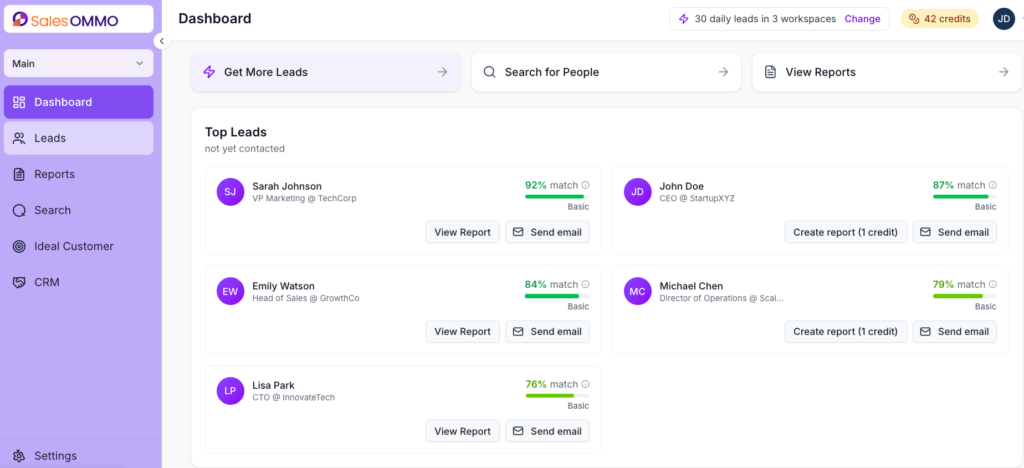
SalesOMMO’s ICP score and deal tracking features give teams a live view of qualification quality across the pipeline, so you can see not just how many leads are coming in, but how many are worth pursuing.
Step 4: Treat Prospecting as Both Structure and Human Judgment
This is where prospecting gets interesting. The science matters: goals, process, metrics, review cadence. But the art matters too: message quality, timing, account judgment, and how a rep adapts in a real conversation.
If your team only follows a script, they become predictable and easy to ignore. If they only rely on instinct, they become inconsistent. The strongest B2B prospecting plans leave room for both. The framework creates discipline. The rep creates relevance.
This is the principle behind SalesOMMO’s ‘upgrade human judgment’ positioning. Agentic-AI handles the routine parts: initial qualification, research, data enrichment, Executive Brief generation. Humans decide who to contact, when, on what channel, and what to say. That combination consistently outperforms both pure automation and pure manual effort.
Step 5: Execute, measure and implement feedback
Any plan is better than no plan, but most plans don’t work perfectly, and many plans fail when you put them in practice.
It is hard to anticipate all your customer needs, put them in a script, and keep your conversation strictly in line with what you have in the script. Customers will sense that, and they would have the feeling that they speak to a robot.
Before every meeting you have prepare by reading the anticipated objections provided in SalesOMMO’s Executive Brief, and also the open questions provided to help you run more insightful conversations. Listen, be curios, and be present, make sure you add value to the customers’ particular business situation, not to a general industry problem.
Adapting on the go and earning customers’ trust by adding value in their context is the art part in selling, it cannot be scripted, and it is hard to measure with other means than the goal outcome: leads qualified into deals, solutions adapted to particular situations and accepted, and, ultimately, deals closed won.
Activities can be tracked, but most of the times more activities don’t lead to more deals closed. Most successful sales performers deploy less-is-more sales strategies. What really matters is the deals they closed (revenue, and/or profitability), not the number of calls made or how many meetings they had.
Run a honest and open win/loss analysis periodically (i.e. monthly) with your manager (if you are in sales) or business coach (if you are an entrepreneur) and make sure you update your scripts and plans in line with real customer situations.
B2B Sales Prospecting Plan: A 5-Step Template
- Define your ICP. Company size, industry, geography, revenue range, and, most importantly, highlight the business problem you solve best.
- Set your SMART goal. Qualified meetings per month, target ICP segments, time period.
- Build your activity stack. Choose 3–5 high-leverage prospecting activities. Rank them by historical effectiveness.
- Qualify every lead before outreach. Use your ICP score (SalesOMMO automates this) and GTM Intelligence to filter leads before any rep time is invested.
- Track outcomes, not just activities. Review conversion rates from first touch to meeting, and from meeting to proposal, monthly.
Start prospecting with SalesOMMO free. Build your prospecting plan around real GTM Intelligence, and skip the guesswork. Get the ICP score, Executive Briefs, and Agentic-AI qualification for your first 5 leads now (no credit card required).