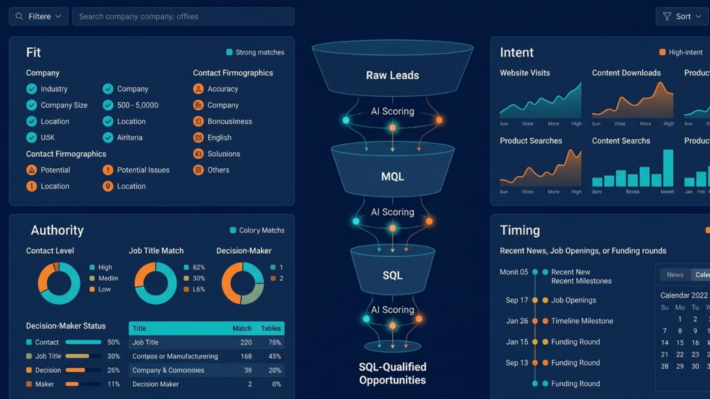
Lead Qualification Criteria: How to Know Which B2B Leads Are Worth Your Time
TL;DR: Most articles on lead qualification frameworks read like a menu: here are six acronyms, pick one. If you cannot apply it in a real conversation with a real lead is not a framework, it is vocabulary. This guide covers BANT, CHAMP, and MEDDIC, the costs of applying each one, and which fits better a small B2B sales team running a GTM Intelligence platform and Agentic-AI qualification, but working without an SDR layer. The framework matters less than the pre-call work to decide which leads deserve the conversation in the first place.
The Framework Question Nobody Answers Honestly
The articles about B2B lead qualification frameworks all follow the same structure. Here is what each acronym stands for. Here is the theoretical case for each one. Here is a comparison table. Now pick one.
What they skip: what each framework actually costs to apply. Which deals it was designed for. Whether a founder running sales alongside a product and a team and an investor update can realistically run it on 20 leads a week without it becoming overhead.
A lead qualification framework is only useful if it runs in the background of a real conversation without sounding like an interrogation. If it adds friction to the discovery call, it is the wrong framework. If it produces technically correct answers that do not reflect what the buyer is actually thinking, it is being misapplied.
The goal here is a direct answer to a practical question: which framework should a small B2B sales team actually use, and what should be in place before the framework even matters?
Why Lead Qualification Frameworks Exist
A lead qualification framework is a structured set of criteria and questions that provides a consistent method to decide whether a lead is worth pursuing. Without one, every deal qualifies differently, pipelines fill with uneven opportunities, and sales forecasting stays perpetually unreliable.
The deeper problem frameworks solve is consistency. When two people look at the same lead and reach opposite conclusions, the issue is almost never judgment. It is the absence of a shared standard. A qualification framework creates that standard. It is the difference between a pipeline where “qualified” means something specific and one where it means whatever each individual rep decided that morning.
One distinction matters before going further: lead scoring and lead qualification frameworks are related, but different.
Lead scoring assigns numeric values to prospects to rank them by priority, via an automated, data-driven output.
Lead qualification is a framework followed in a guided human conversation that confirms or overrides the score.
You use scoring to decide which leads to call first. You use a framework to decide, on that call, whether the lead is actually worth continuing with. Both are necessary. Confusing them produces pipelines full of high-scoring leads that never close.
BANT: The Oldest Framework, Still the Most Practical for the Right Context
BANT was developed by IBM in the 1950s. It evaluates four things: Budget, Authority, Need, and Timeline. Does the lead have the money to buy, the authority to decide, a genuine need for what you sell, and a timeline that makes a deal possible in a reasonable window?
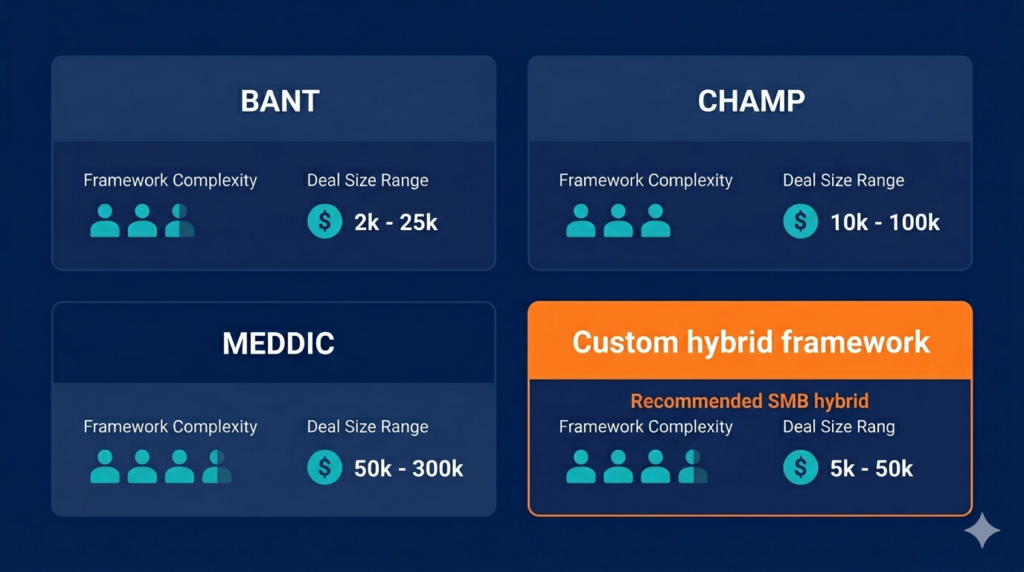
BANT is not sophisticated. That is its primary strength. A person can run through it in the first five minutes of a discovery call and get a clear read on whether the conversation deserves another 45 minutes. It works best for shorter sales cycles, transactional deals under roughly €25,000, and teams handling high lead volume that need a fast, repeatable filter.
Where BANT falls short is in complex B2B solution sales, where budget often does not exist until a rep builds the business case for creating it, and where asking “what is your budget?” in the first conversation can end a deal before trust is established. The question signals that you care about the transaction more than the problem. That is the wrong signal, especially at the beginning of a consultative engagement.
The other limitation is structural: BANT treats qualification as a one-time gate. You check four boxes, the lead passes, and the framework disappears. For longer sales cycles with multiple stakeholders and shifting priorities, a single checkpoint is not sufficient as the sales pipeline is fluid as customer priorities might also change in time (new priorities can take over).
A practical advice: look also for compelling reasons to act: are there any business pains that have priority over others? What can be postponed? Executives in charge with mission critical operations will have highest priorities initiatives that need to be executed before others.
When BANT fits: short sales cycles. Defined pricing. A product that does not require extensive education before the buyer can assess fit. If your team is handling 30 or more qualified leads per week and needs a fast, consistent screen, BANT is the right tool.
One practical adjustment: Replace “what is your budget?” with “how does your company typically evaluate and fund tools like this?” You surface the same information with significantly less friction, and the answer tells you more about the actual decision process.
CHAMP: BANT Inverted for Consultative Selling
CHAMP stands for Challenges, Authority, Money, and Prioritization. It covers the same ground as BANT but in a different order. The sequence change matters more than it appears.
By leading with Challenges rather than Budget, CHAMP puts the buyer’s problem at the center of the conversation. The logic is sound: if you understand the problem clearly enough, and the pain is real, budget becomes a downstream consequence rather than a prerequisite. A challenge that is serious, happening now, with measurable consequences, will find a budget. A conversation that opens with “do you have money?” rarely creates that kind of urgency.
CHAMP also introduces Prioritization, which BANT does not address at all. A lead can have a genuine problem, the authority to act, and money available, and still not move, because fixing this particular problem is number seven on a list of twelve. Prioritization asks the direct question: is solving this something you are actually going to do this quarter, or is this a someday initiative?
That distinction separates conversations that feel productive from deals that actually close.
CHAMP works well in mid-market B2B sales where the solution is not a commodity, where the buyer needs some context before they can self-assess fit, and where the rep builds a business case alongside the prospect rather than pitching from a feature list.
When CHAMP fits: selling something the prospect may not yet realize they need. Fluid budget environments where budget is created rather than allocated. Reps who are genuinely comfortable with a longer, exploratory first conversation and can resist the urge to pitch before the problem is fully understood.
Where to stay alert: CHAMP can produce conversations that feel productive but generate no forward momentum. A lead with a real challenge and no credible path to a decision is an interesting discussion, not a deal. Weight Prioritization seriously, and ask directly: “Where does solving this sit on your list of priorities for the next 90 days?”.
MEDDIC: The Enterprise Framework for Complex Deals
MEDDIC stands for Metrics, Economic Buyer, Decision Criteria, Decision Process, Identify Pain, and Champion. It was developed at PTC in the 1990s and has since become the dominant qualification methodology in enterprise sales for a simple reason: it maps the full internal complexity of a large-company buying decision, not just the surface-level fit.
Each element does specific work.
- Metrics forces the prospect to quantify the impact of their problem in numbers, moving the conversation from vague pain to measurable cost.
- Economic Buyer identifies the person who actually controls the budget, which is rarely the person on the initial call.
- Decision Criteria documents what the buying committee will use to evaluate and compare vendors.
- Decision Process maps the internal steps from “we want to buy this” to a signed contract.
- Identify Pain goes deeper than CHAMP’s Challenges — it asks specifically what the cost of doing nothing looks like over the next 12 months.
- Champion identifies an internal advocate who will actively sell your solution when you are not in the room.
One important clarification: MEDDIC is not a discovery framework. It is a deal management framework. You apply it not to decide whether to pursue a lead, but to understand whether you are going to win the deal that is already in play, and what is currently missing from your position.
Sales reps using MEDDIC ask questions like: “What happens to this initiative if the budget freeze is not lifted by Q3?” and “Who else has tried to sell a similar solution to this committee in the last 18 months?” These are not first-call questions. They are the questions you ask when you are already managing a real, qualified opportunity.
When MEDDIC fits: Deals above €50,000. Sales cycles longer than three months. Buying committees with five or more stakeholders. Any deal where complexity at a late stage can derail what looked like a close.
The costs to use it: MEDDIC requires experienced sales reps who can run a strategic conversation without sounding like they are filling out a form. It also assumes a relatively small number of high-value deals in play at once, because the qualification depth required per deal is significant. A rep managing 80 leads per month cannot run MEDDIC across the full pipeline. It is a tool for focused management of serious enterprise opportunities, not a filter for incoming MQLs.

What Small B2B Teams Actually Need (A Practical Version)
Here is the part most framework articles avoid.
If you are a founder, a solo salesperson, or a small team without a dedicated SDR layer doing early sorting, none of the frameworks above is what you need to start with. What you need first is not a framework. It is a documented Ideal Customer Profile, a short list of disqualifiers you apply automatically, and two or three qualifying questions you ask in every first conversation. Plus access to GTM Intelligence so you get the ICP score, get context, and extract insights.
Frameworks assume a sales infrastructure that most small teams do not yet have. MEDDIC assumes experienced reps managing a small number of high-value deals. CHAMP assumes a consultative sales motion with enough time for a long discovery process. BANT assumes lead volume high enough that speed of qualification is the primary constraint.
For a founder performing their own sales alongside product development and investor management, or for people in small sales teams the practical reality looks different. Twenty leads arrive this week. They all need a first response. Research needs to happen before any call. There are five other priorities more urgent than building a qualification architecture.
The question is not “which framework is theoretically correct for my stage?”
It is: “how do I reach a consistent qualified or not qualified decision on every lead, fast, without dropping the ones that actually matter?”
The answer for most small B2B teams is a lightweight hybrid of BANT and CHAMP. Confirm three things before any real meeting gets booked: there is a real problem that your product addresses; the person you are talking to is at least adjacent to the decision-making authority; and there is enough urgency that “soon” is plausible rather than hypothetical. If all three are present, continue. If one is missing, decide whether it can be addressed in the short term. If two are missing, stop and move to nurture.
Document those three questions. Make them specific to your product and your ICP. Make sure every lead gets them before a calendar invite goes out. That is your qualification framework for now, and it will outperform any acronym until the pipeline volume or deal complexity demands more structure.
The Mistake Teams Make When They Implement a Framework
The most common problem with lead qualification frameworks is not choosing the wrong one. It is treating the chosen framework as a script to execute rather than a structure for a real conversation.
When a rep runs through BANT like a form (i.e. direct questions: “what is your budget, who is the decision-maker, what is your timeline”) the buyer feels it. The conversation becomes transactional before trust is established. The rep gets technically correct answers that do not reflect what the buyer is actually thinking, and the deal drifts from there.
Frameworks are designed to ensure that the right information surfaces during a conversation where the buyer is doing most of the talking. The framework is the mental checklist running in the background. It is not the structure the buyer hears out loud.
The second mistake is applying one framework uniformly across every deal type. A framework built for transactional inside sales will frustrate enterprise buyers who expect a strategic conversation. A framework designed for €200,000 enterprise deals will feel like excessive overhead on a €5,000 annual subscription. Match the framework to the deal complexity and sales cycle, not to whichever methodology was featured in the last team training.
A Practical Lead Qualification Checklist for the First Call
Framework-agnostic. Fast to run. Applies regardless of whether your team uses BANT, CHAMP, MEDDIC, or a working hybrid.
Before the call, on the lead: Does the company size and industry match the ICP? Is the contact at a seniority level suggesting buying authority or influence? Has the lead taken any high-intent action — demo request, pricing page visit, repeat site visits? Is there any visible trigger event in public data — funding round, leadership change, expansion announcement?
On the call: Can the lead describe a specific problem that your product addresses, in their own words? Who else is involved in evaluating a solution like this? What happens if this problem does not get resolved in the next quarter? What does their internal decision process look like for something of this scope? Is there a timeline, even a rough one?
After the call: Is there a clear next step that the lead explicitly agreed to? Is the problem real and urgent enough to justify continued time investment? Do you have direct access to the right decision-maker, or a credible path to them?
If most of those answers are yes, the lead belongs in active pipeline. If more than two are unclear or no, it goes to a nurture track with a defined re-engagement trigger. If it fails the pre-call layer entirely, it is disqualified — with the reason logged so patterns can be reviewed quarterly.
The Pre-Call Problem: Where Most of the Time Actually Goes
Qualification frameworks are the structure for human judgment during a conversation. They do not address the problem that sits upstream of the call — figuring out which leads deserve the call in the first place.
For founders performing their own sales and for small teams without research support, the pre-call work is where the time goes. Researching a single lead properly (i.e. – company background, key executive profile, recent news, likely business pains, a hypothesis about fit) takes 20 to 40 minutes per contact.
Multiply that by the number of leads entering the funnel each week, and the qualification infrastructure is already consuming the time that should be going into conversations and closing deals.
This is the problem that GTM Intelligence solves at the infrastructure level, and where Agentic-AI qualification earns its place.
SalesOMMO’s platform runs the research, applies the ICP Score against your defined Ideal Customer Profile, and generates an Executive Brief for each lead before you see them: company context, key executive insights, industry challenges, suggested questions for the first call, and anticipated objections.
The research a rep would otherwise spend 30 to 40 minutes gathering is done before the lead lands on the dashboard.
What stays human is the part that should stay human. The framework (BANT, CHAMP, or your working hybrid) runs on top of that foundation. You arrive at the qualifying conversation already knowing whether the lead is worth it. The framework is no longer doing double duty as both a research tool and a judgment guide. It is doing its actual job: guiding a conversation where you are prepared and the buyer feels it.
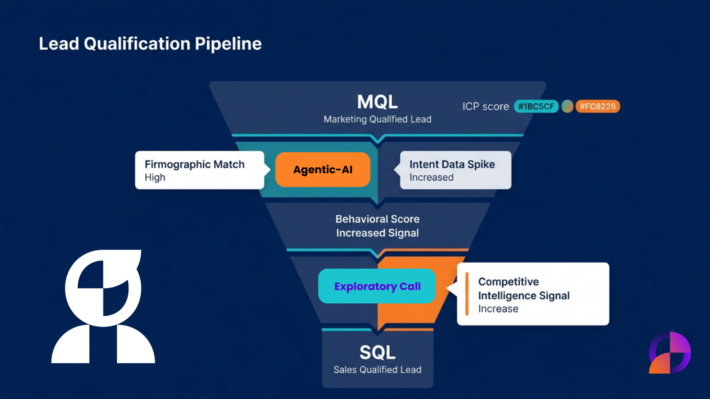
This is the less-is-more sales strategy applied where it matters most. Fewer first calls, better preparation, higher conversion from the ones that happen. The optional Agentic-AI qualification can also advance the highest fit leads from MQL to SQL automatically. Win rates improve not because volume increased, but because the right conversations happen at the right time with the right context.
SalesOMMO is the GTM Intelligence platform for entrepreneurs and B2B sales teams. No more spray-and-pray. No more AI-slop. Upgrade human judgment with data and insights. Amplify humans, not inboxes.
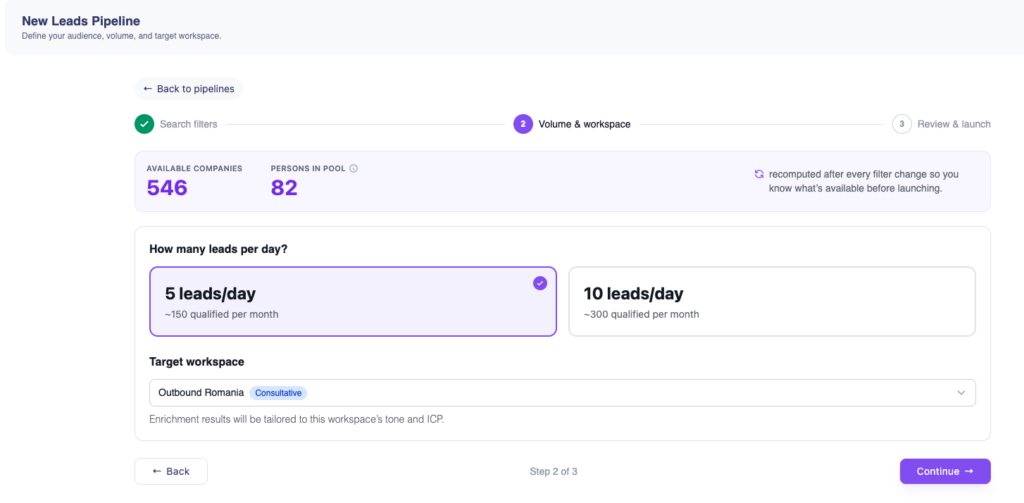
Get up to 150 new ICP-scored MQLs per month, with optional Agentic-AI qualification to narrow those into the SQLs that genuinely deserve your time. Full feature detail (ICP Score, Executive Brief, Agentic-AI qualification) at salesommo.com/features.
Free to start. From €99/month at salesommo.com.