Lead Qualification in B2B Sales: Process, Checklist, and How Agentic-AI Changes the Game
TL;DR: Most pipeline problems are not lead generation problems. They are lead qualification problems. Sales reps spend time on the wrong leads, forecasts miss, and conversion rates stay flat. This is happening not because the product is wrong, but because of wrong conversations happening. This guide covers what lead qualification is, how to do it consistently with a clear process and checklist, and how Agentic-AI qualification from SalesOMMO removes the manual work that makes the whole system break down for entrepreneurs and small B2B sales teams.
The Real Pipeline Problem Nobody Wants to Name
Sales teams are rarely short of leads. They are short of the right leads, and they spend significant time and budget discovering the difference after the fact.
The cost is visible in the data. Demos that go nowhere. Forecasts that miss every quarter. People burning out chasing contacts that were never going to buy. According to CSO Insights, poor lead quality is one of the top reported reasons for missed quota across B2B sales organizations. The culprit is almost never the product. It is the absence of a structured qualification system.
Lead qualification is the mechanism that decides which leads deserve your time and which do not. Applied well, it is the single highest-leverage input into your win rate. Applied badly, or skipped entirely, it turns lead generation into a pipeline tax — volume without direction.
This guide walks through the full process: what lead qualification is, the types of qualified leads you will encounter, a step-by-step qualification workflow, a practical checklist you can apply this week, and where Agentic-AI qualification changes the economics for founders and small sales teams that have access to SalesOMMO’s GTM Intelligence platform.
What Is Lead Qualification?
Lead qualification is the structured process of evaluating a prospect’s fit, intent, and ability to buy before investing significant sales time in them.
A simple framing: lead generation fills the funnel. Qualification clears it. Marketing brings volume. The qualification work decides which of those leads earns a real conversation.
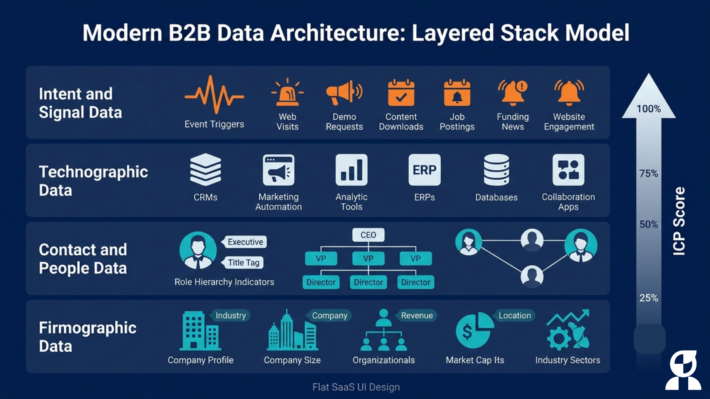
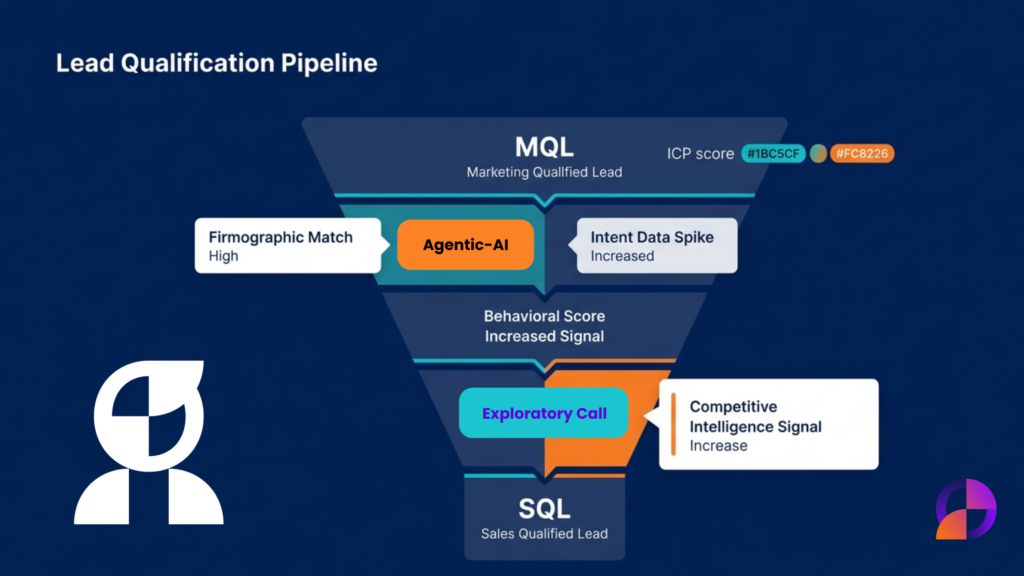
That work happens at two layers. The first layer is automated: firmographic data, behavioral signals, and an ICP score (Ideal Customer Profile score) do the early sorting. The second is human: a rep on a discovery call confirms what the data suggested, and reads intent that no system can fully replicate.
Both layers matter:
- Skip the automated layer and sales performers will drown in noise.
- Skip the human layer and you trust a scoring model to read context it cannot see.
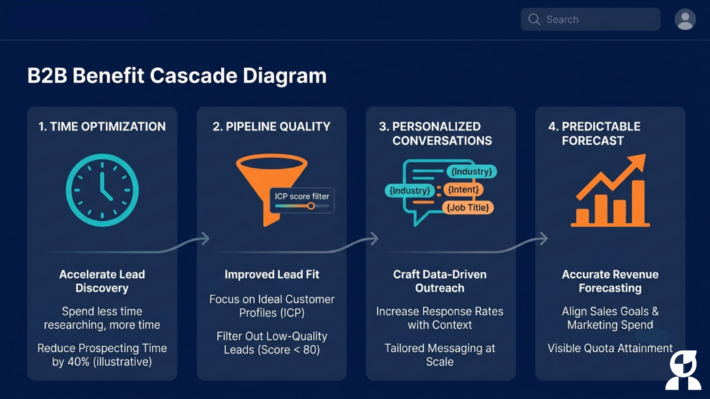
Done correctly, qualification delivers three measurable outcomes: a shorter sales cycle, improved conversion rates, and cleaner pipeline data to forecast against.
Done incorrectly, it wastes the time of your sales team, your marketing team, and your prospects: all three of whom lose when a sales conversation happens before it should.
Qualified Leads vs. Unqualified Leads: The Distinction That Matters
A qualified lead is a prospect who fits your Ideal Customer Profile, has a problem your product addresses, has authority or access to authority to make a buying decision, and has some urgency to act. Teams that qualify consistently look for all four. An unqualified lead is missing one or more of those, and sometimes all of them.
The distinction is not about form completions or content downloads. Plenty of unqualified prospects do both. It is about whether the underlying conditions for a deal actually exist.
A student researching for a thesis, a competitor mapping your product, a manager from a company half the size of your minimum threshold — all of them can look like real interest until you apply qualification criteria.
The goal is not to be exclusive for its own sake. It is to protect your time, your team’s capacity, and your prospect’s patience. None of them benefit from a sales conversation that was premature.
Lead Scoring vs. Lead Qualification: They Answer Different Questions
These two terms get conflated regularly. They should not.
Qualification answers: is this prospect worth pursuing at all? At its core, it is binary — in or out. Lead scoring answers: among the leads that already passed qualification, which ones do I contact first?
Lead scoring assigns numeric values to attributes (i.e. job title, company revenue, pages visited, emails opened, demo requested) and ranks prospects so a human working a queue knows where to start.
You need both. A lead score without qualification is a ranking of leads you should not be working at all. Qualification without scoring leaves sales performers guessing which qualified lead to call first when ten of them land at the same time.
Together, they let marketing and sales operate the same pipeline without the weekly argument about lead quality.
The Three Types of Qualified Leads You Will Work in B2B
Once a lead passes basic qualification, the next question is what kind of qualified lead it is. The type determines who works it, when, and with what message.
Marketing Qualified Leads (MQLs) are leads that have met the firmographic and behavioral signals marketing agreed to use as a baseline: a target role, a target industry, repeat visits to high-intent pages, a demo request, or specific content engagement. An MQL is a reasonable assumption that a lead is worth handing to sales. It is not a confirmation. That comes next.
Sales Qualified Leads (SQLs) are leads that a sales rep has reviewed, contacted, and confirmed as a real opportunity. Where an MQL is an assumption, an SQL is evidence. Someone ran a discovery call, asked the right questions, and verified that the lead has genuine need, workable timeline, budget or a path to budget, and access to the decision-maker.
The MQL-to-SQL conversion rate is one of the most useful diagnostic metrics in B2B sales, and it measures how well marketing and sales agree on what a good lead actually looks like.
Product Qualified Leads (PQLs) exist when your product has a self-serve or freemium access tier.
A PQL is a prospect who has used the product and hit usage signals that indicate real value: setup completed, core feature used, a second user invited. PQLs tend to convert at higher rates than cold MQLs because the prospect has already experienced the product rather than being evaluated against a pitch about it.
One practical note for founders running their own sales: if you are the only person selling, the MQL/SQL labels can feel like overhead. They are, to some extent.
The labels matter most when sales and marketing are separate functions that need a shared vocabulary. But the work still has to happen. You still need to qualify before investing forty minutes in a call. The stage name in the CRM is optional. The decision process is not.
The Lead Qualification Process: Step by Step
The process below applies across B2B SaaS, service firms, and tech companies of different sizes. Treat it as a sequence, not a menu of optional moves.
Step 1: Align on ICP and qualification thresholds. Everything starts with a documented Ideal Customer Profile. The ICP defines what kind of company is worth talking to: industry, employee count, revenue band, geography, and the firmographic markers your best closed-won deals share. Build it from your last 30 to 50 closed-won customers. Find what they have in common.
Once the ICP is documented, set the thresholds. What is the minimum company size you will pursue? Which industries are in scope and which are out? What geographies do you actually serve? The thresholds are where qualification gets practical, because they turn a broad description into pass/fail rules a system can apply automatically.
Sales and marketing need to agree on these in writing. If marketing defines the floor at 50 employees and sales keeps rejecting anything under 200, the year gets spent arguing about lead quality. The specific threshold matters less than the shared commitment to one.
Step 2: Research before contact. Before a rep contacts anyone, the lead needs context. That means pulling together what is needed to evaluate fit and tailor the first conversation: what the company does, their size, recent news, leadership changes, the specific role of the contact, and a hypothesis about the business pain your product addresses.
This step quietly consumes more time than any other in the qualification process. Manually researching one prospect takes 20 to 40 minutes. Across a list of 50, that is two full working days per week on research alone. This time should be going into conversations and closing deals.
This is exactly where GTM Intelligence and Agentic-AI qualification change the economics.
SalesOMMO’s platform automatically generates an Executive Brief for each prospect: company context, key executive background, industry challenges, a suggested set of questions, and an ICP score — before you open the first tab. What took 30 minutes takes seconds.
Step 3: Capture and enrich the right data. The form a lead fills out determines what you can qualify against. Too many fields and conversion drops. Too few and you have nothing to work with. The approach that works: a short form capturing name, business email, company, and one qualifying question, backed by real-time enrichment that fills in the rest automatically.
Enrichment adds company size, revenue estimate, industry, location, and the contact’s seniority from data providers — in seconds, before you see the lead. Every field you ask the prospect to fill out is a tax on conversion. If a data provider can supply the answer from an email address, do not put it on the form.
Step 4: Contact and evaluate. Once a lead clears the data layer, the human work begins. A rep reaches out — email, discovery call, LinkedIn — with the goal of confirming whether the prospect’s real situation matches what the data suggested. The job here is not to pitch. It is to ask.
A short, well-structured discovery conversation tells you more about readiness than a stack of behavioral signals. It surfaces the actual business problem in the prospect’s own words, and reads whether their urgency is real or polite. This is also where the rest of the qualification picture comes together: budget context, decision-making process, timeline, and the path to authority if the contact is not the decision-maker.
Step 5: Apply a consistent qualification framework. A framework gives the conversation structure so that two reps qualifying leads against the same criteria reach similar conclusions. BANT (Budget, Authority, Need, Timeline) still works for shorter, transactional sales cycles.
For consultative or complex B2B sales with longer cycles, MEDDIC puts decision process and internal champion at the center — which is more realistic for deals where multiple stakeholders are involved.
The framework’s main job is consistency. “Qualified” needs to mean the same thing across the entire team, not a judgment call that varies by rep. Pick one framework, document the specific questions reps ask, and stick with it long enough to get comparable data out the other side.
Step 6: Confirm the point of contact. A surprising number of well-qualified-looking leads collapse at one question: does this person have any real influence over the decision?
The contact may have initiated the demo request, attended the meeting, and asked intelligent questions — and still not be in a position to move anything forward. Asking “who else is typically involved in evaluating a solution like this?” is more reliable than asking “are you the decision-maker?” The first question gets you an honest answer. The second usually gets you a yes that is wrong.
If the real decision-maker is not in the room, the next step is to map the rest of the buying group and bring them in before too much time is invested.
Step 7: Route immediately, based on fit and urgency. Speed matters. Once a lead qualifies, the time to first meaningful response is one of the strongest predictors of whether the deal advances. The best B2B teams measure speed-to-lead in minutes, not hours, and automate routing so that no one manually triages a queue.
Urgency matters here too. A high-fit lead showing strong intent — multiple high-value page visits, a demo request, a contract that is about to expire — gets a different lane than a high-fit lead who downloaded one whitepaper. Both are qualified. Only one is hot.
Step 8: Schedule follow-up with structure. Many qualified leads do not book a meeting on the first pass. A meaningful percentage of inbound prospects that clear qualification never pick a time without a structured follow-up. The fix is simple: a short outreach within hours of qualification, a second touch the next day, and a value-add follow-up later in the week.
Leads that nearly qualified but missed on one criterion belong in a follow-up sequence, not a dead file. Many of them become real opportunities in three to six months when a hire happens, a contract ends, or priorities shift.
Step 9: Analyze and refine continuously. Qualification is not a set-and-forget exercise. Your ICP changes as your product matures. The signals that predicted closed-won deals 12 months ago may be weaker today. A working process gets reviewed at least quarterly.
The numbers worth tracking: qualification rate, MQL-to-SQL conversion rate, win rate by lead source, and the most common disqualification reasons reps log. If qualification rates rise but win rates stay flat, the bar has gotten too generous. If reps routinely override the system to pursue leads it disqualified, the rules need adjusting. The data tells you what to change.
Lead Qualification Checklist
Run any inbound lead through this list. Use it to decide whether a lead deserves a real conversation or belongs in a nurture track.
Before the lead arrives: The ICP is documented and agreed between sales and marketing. Two or three signals that most strongly predict a closed-won deal are defined. The form captures the minimum fields, with enrichment handling the rest. Email validation is in place to block invalid and disposable addresses.
When the lead arrives: Email is valid and not from a competitor or disposable domain. Company size meets the minimum threshold. Industry is in scope. Geography is one you serve. The contact’s seniority is captured or enriched. The lead is not already owned by another rep.
Before a meeting is booked: The lead has either taken a high-intent action or been validated through a brief conversation. The point of contact is confirmed, or the path to the decision-maker is identified. A timeline or trigger event has surfaced. A clear next step is set, owned, and on the calendar.
After the first meeting: Outcome is logged, with a disqualification reason if relevant. Routing rules are reviewed monthly. Disqualification rates are reviewed quarterly to ensure good prospects are not being filtered out incorrectly. MQL-to-SQL conversion is reviewed quarterly with both teams in the room.
The list is intentionally short. A workflow that takes ten minutes to apply will not get applied consistently. One that takes 90 seconds will.

Where Agentic-AI Qualification Changes the Game for Founders and Small Teams
The process above works. The problem for entrepreneurs and small sales teams is the time it takes to run it manually.
The research step alone takes 20 to 40 minutes per prospect, adding up to multiple hours per day before a single conversation happens. For a founder who is also managing the product, the team, and investors, that math breaks down fast.
This is the core problem SalesOMMO was built to address. The qualification work has to happen. The question is who does it, and when.
SalesOMMO’s Agentic-AI qualification automates the research, scoring, and preparation layer of the process. Each lead gets an ICP score automatically. An Executive Brief is generated before the first contact, providing company context, key executive insights, industry challenges, suggested questions, and anticipated objections. Draft personalized outreach messages are ready when you are.
Powered by SalesOMMO’s GTM Intelligence, the MQL-to-SQL transition happens on evidence, not assumption, and it happens in seconds instead of 40 minutes.
What stays human is the part that should stay human: the judgment call on who to contact, the actual conversation, the relationship. The AI does the groundwork. The human does the closing.
For a small team running 30 to 50 open opportunities across multiple verticals, this is not a nice-to-have. It is the operational infrastructure that makes the less-is-more sales strategy viable. You talk to fewer prospects, but the right ones, prepared and with context. Win rates improve not because volume increased, but because precision did.
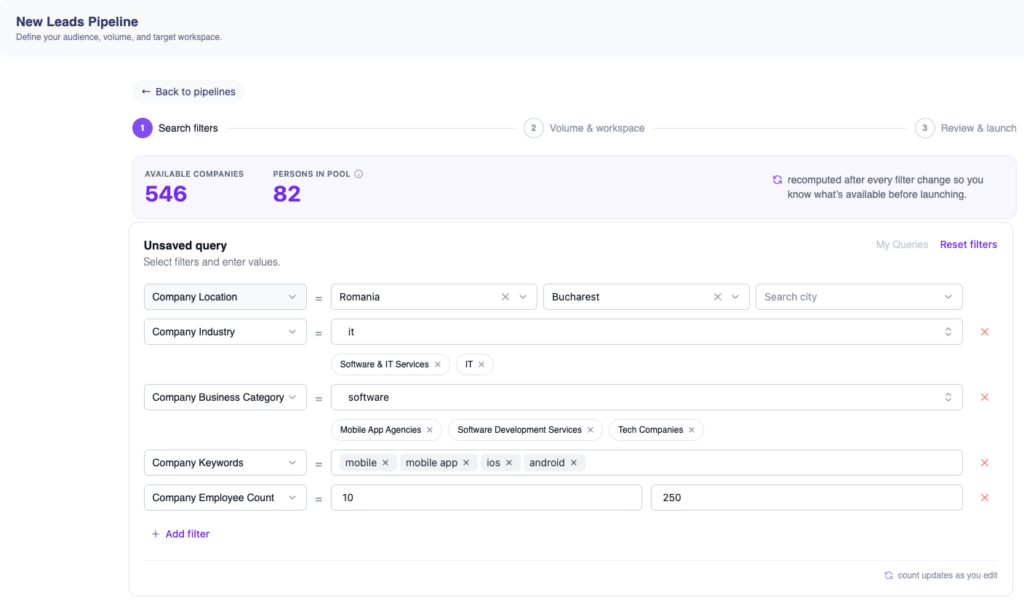
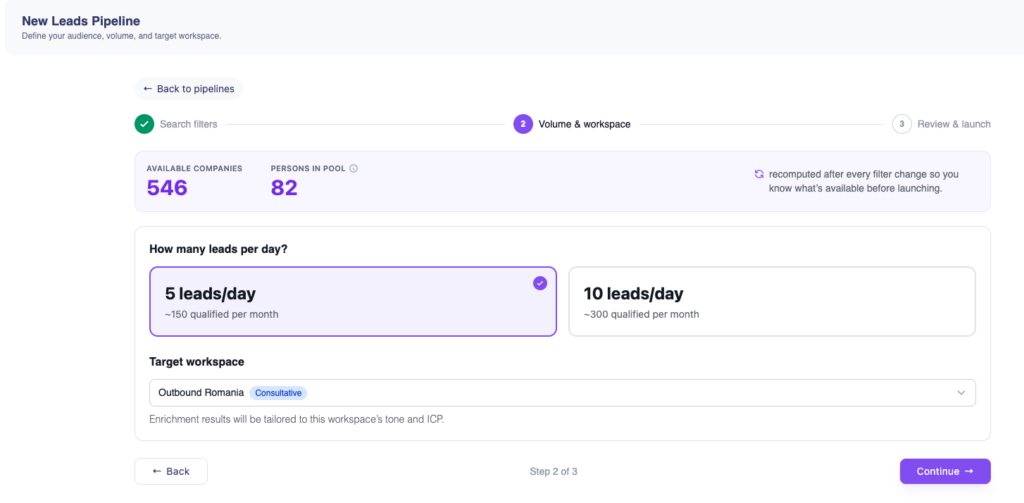
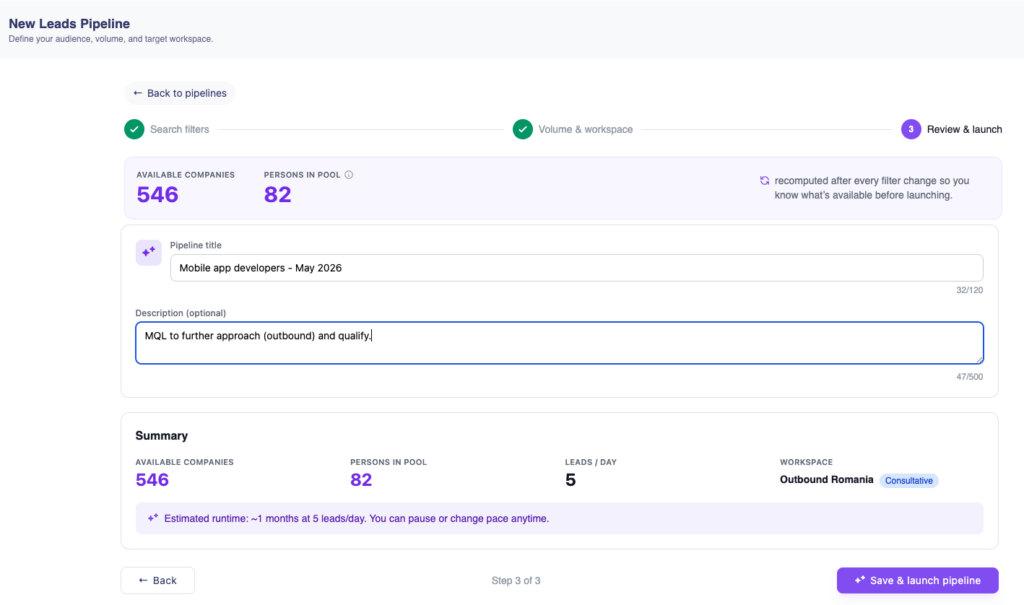
SalesOMMO delivers up to 150 new ICP-scored MQLs per month, with Agentic-AI qualification available to narrow those down to the SQLs worth your time. Start free at salesommo.com, or explore the full feature set: ICP Score, Executive Brief, and Agentic-AI qualification workflows.
Six Compounding Moves That Work When Qualification Is Solid
Strong qualification is the foundation. These six moves compound results on top of it.
Narrow the ICP with discipline. Most small businesses lose more deals to a fuzzy profile than to a weak product. Picking the customer you serve best, and consistently walking away from the ones you do not, makes every downstream step in the process work harder.
Automate the research and personalization layer. The bottleneck for founders and small teams is rarely lead volume. It is the time required to research and personalize at scale. Tools that produce the research for you — and draft a first message that is actually tailored to the prospect’s context — free up the part of your week that should be going into conversations.
Shorten time from qualification to first contact. The data on speed-to-lead is consistent: every hour of delay reduces the probability of conversion. A qualified lead reached within five minutes is worth multiples of the same lead reached the next day.
Treat near-miss leads as a future opportunity. A lead that does not fit today often fits in six months after a hire, a budget cycle, or a shift in priorities. A short, structured follow-up track for near-misses recovers more pipeline than most teams expect.
Build a quarterly feedback loop between sales and marketing. The qualification thresholds you agree on in January will not be the right ones by October. The teams that review and adjust together, regularly, are the ones that pull ahead.
Remove the manual qualification work from the founder’s plate. This is where GTM Intelligence has the most direct impact for entrepreneurs. Daily ICP-scored leads, Agentic-AI qualification, an Executive Brief, and draft personalized messages mean the groundwork is done before you see the lead. Your time goes into conversations, not into the research that decides which conversations are worth having.
SalesOMMO is the GTM Intelligence for entrepreneurs and B2B sales teams. Agentic-AI qualification, ICP scoring, Executive Briefs, and hyper-personalized outreach — without the spray-and-pray.
Free to start. From €99/month at salesommo.com.