Lead Qualification Criteria: How to Know Which B2B Leads Are Worth Your Time
TL;DR: A pipeline full of meetings is not the same as a healthy pipeline. The difference almost always comes down to which leads made it through and why. Lead qualification criteria are the specific, measurable signals that turn “good fit” from a vague feeling into a pass/fail decision a system or a human seller can apply in 60 seconds. This guide covers the four categories every B2B team that has access to a GTM Intelligence platform needs to evaluate, how to identify the criteria that actually predict a closed-won deal in your business, the checklist to run every inbound lead through, and where Agentic-AI qualification removes the manual work that makes the whole system break down at scale.
A Calendar Full of Meetings Is Not a Pipeline Problem. It Is a Criteria Problem.
Three no-shows in a week. Ten discovery calls that end with “we’re just gathering information.” The leads were there. The hours were spent. The deals were not.
This is one of the most common and expensive patterns in B2B sales, and it is almost never a lead generation problem. It is a qualification problem — specifically, the absence of precise, agreed-upon criteria for which leads deserve a real sales conversation.
Get the criteria right and the same volume of leads produces a fundamentally different quality of pipeline. Get them wrong, or never document them at all, and your reps spend the quarter chasing names instead of opportunities.
This is not a judgment on the team. It is a systems problem. And as I have seen consistently in practice — across 20+ years in B2B enterprise sales and through working with dozens of companies as a GTM consultant — the root cause is almost always the same: qualification is treated as intuition when it needs to be infrastructure.
This guide walks through what lead qualification criteria actually are, the four categories every team should be evaluating, how to figure out which signals predict closed-won deals in your specific business, the mistakes that inflate pipelines with the wrong leads, and a practical checklist you can run any inbound lead through in under a minute.
What Lead Qualification Criteria Are (And What They Are Not)
Lead qualification criteria are the specific, measurable signals your team uses to decide whether a lead is worth a sales rep’s time. They turn a vague idea of “good fit” into pass/fail rules that a system or a person can apply consistently to every lead that enters the funnel.
A useful test: if two reps look at the same lead and disagree on whether to pursue it, the criteria are not specific enough.
Two distinctions matter before going further.
The first is between qualification criteria and a lead score. Criteria decide whether a lead enters the sales process at all — that is a binary decision. A lead score ranks the qualified leads against each other so a rep working a queue knows which one to contact first. The two work together, but they answer different questions. Intelligent lead scoring without qualification is a ranking of leads you should not be working. Qualification without scoring leaves reps guessing which qualified lead to call first when ten of them land at the same time.
The second is between fit and intent. Fit answers: is this the kind of company we sell to? Intent answers: are they actually going to buy soon? A lead can have one without the other. A perfect-fit company that is locked into a competitor contract for another 18 months is not a real opportunity. A highly motivated buyer at a company that is half the size of your minimum threshold is not one either. Strong qualification work checks for both, separately, before drawing a conclusion.
The Four Categories of Lead Qualification Criteria
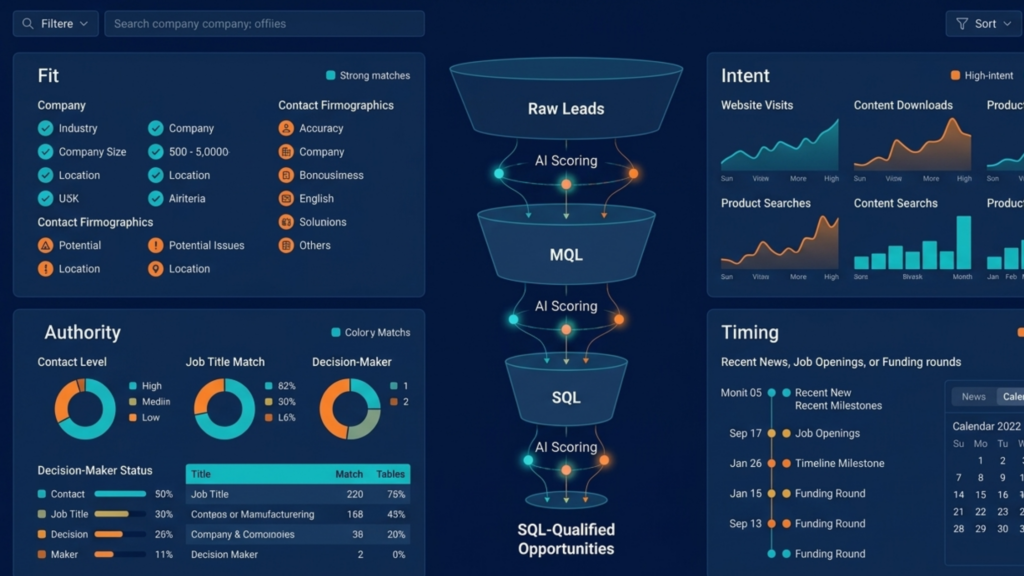
Most articles on this topic list 20 signals in a single flat list. That is how teams end up with criteria nobody can apply consistently under real workload conditions. A more useful structure organizes them into four categories, each answering a different question.
Category 1: Fit — Does this company match what we sell?
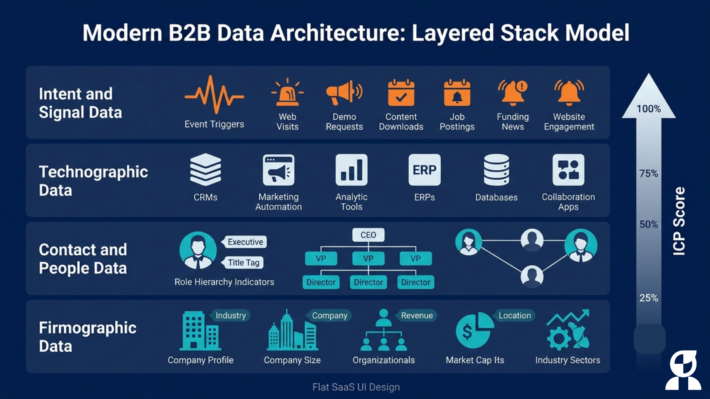
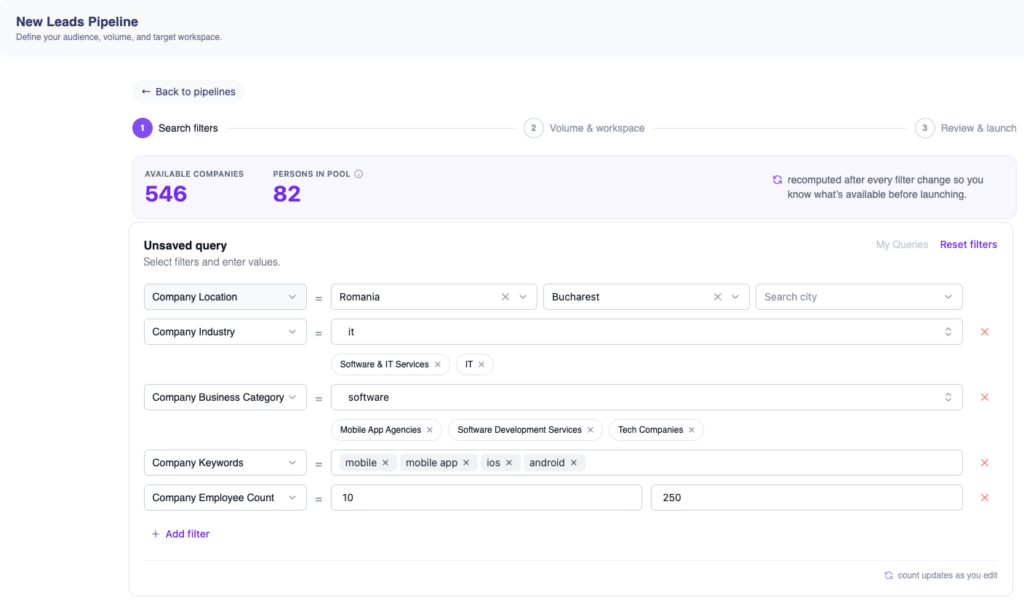
Fit criteria are the firmographic and demographic facts about the lead’s company and the contact you are speaking with. They are mostly knowable before any conversation happens, through the form they submitted combined with an enrichment tool.
The signals that matter most for almost every B2B business: company size with a clear minimum threshold; industry or vertical with an explicit target list and a “do not pursue” list; geography — both for fit and for routing; annual revenue when it materially affects deal size or sales motion; the contact’s job title and seniority; and whether the company is already a customer or an active opportunity in your CRM.
One note on job title: it is a noisy signal on its own. A VP of Operations at a 40-person company and at a 5,000-person company have very different buying authority and decision-making processes. Combine title with company size and seniority before drawing any conclusions.
Category 2: Intent — Are they paying attention right now?
Intent criteria are behavioral signals that tell you a lead is not just a fit in theory, but actively engaged in an evaluation process. These live in your marketing and sales tools rather than in enrichment data.
The signals worth tracking: pages visited, with extra weight on pricing and product pages; demo requests or free trial sign-ups; repeat visits within a short window, which typically signals active comparison; content downloaded, where a competitor comparison or ROI calculator indicates a later buying stage than a category overview does; email click patterns over time; and event attendance in your category.
Each signal is weak in isolation. Combined, they build a meaningful picture of urgency. A target-fit lead that visited the pricing page three times this week and downloaded a comparison guide is doing something specific. That is a different level of priority than a brand-new MQL that matched your Ideal Customer Profile and clicked one email.
Category 3: Authority and Timing — Can they actually buy, and when?
This is the category most teams underweight, and the one that explains why so many “qualified” leads stall before they ever become SQL opportunities. A lead can have strong fit and visible intent and still be 18 months from a real decision, or two organizational layers below the person who signs the contract.
What to look for: the contact’s seniority and actual influence, ideally confirmed in a direct conversation rather than inferred from a title; who else is involved in evaluating a solution — this is what a real buying process looks like in practice; a trigger event that creates urgency — a recent hire, an expiring contract, a product launch, a regulatory change, a funding round; a stated or implied timeline; and evidence of an active evaluation rather than general research.
Most of these surface during a discovery call, not in form data. This is why qualification cannot be fully automated. The fit layer can run on enrichment and ICP scoring. The authority and timing layer almost always requires a human to confirm on a call.
Category 4: Disqualifiers — The criteria that mean no, fast
This is the category nobody wants to document, but the one that protects more time than the other three combined. Disqualifiers are the criteria that, when triggered, mean the lead is out, regardless of how strong the other signals look.
The most common ones that apply across B2B businesses: company size below your minimum; industry on the “do not pursue” list; geography you do not serve or cannot legally operate in; invalid, disposable, or known competitor email addresses; an existing contract with a competitor that does not expire for 18 months or more; a use case that is outside your product’s capability; and a deal size mismatch that nurture will not fix.
Apply disqualifiers first, before any other qualification work. They are your cheapest filter, and they prevent your team from spending 45 minutes on a discovery call to learn something that was knowable from the form submission. Every lead pulled out before a sales call is time saved for the ones that deserve it.
How to Identify Which Criteria Actually Predict Closed-Won Deals in Your Business
A comprehensive list of qualification signals is useless if your team cannot apply them in 60 seconds. The goal is not to evaluate every lead against every signal. The goal is to find the two or three criteria that most reliably predict a closed-won deal in your specific business, and to use those as the spine of your qualification process.
The fastest way to find them: pull your last 30 to 50 closed-won deals and write down the firmographic and behavioral traits they share. Then pull your last 30 closed-lost deals and the leads your reps manually disqualified, and write down what those have in common. The differences between the two lists are your real qualification criteria.
Most businesses land on a primary criterion (typically company size or industry), a secondary criterion (typically role or geography), and one intent signal (typically a specific high-intent action like a demo request or a pricing-page visit). Three signals, applied consistently, outperform 15 signals applied unevenly across the team.
Once you have the three, document them. Put them in the CRM. Share them with both sales and marketing in the same document. The teams that argue least about lead quality are the ones where everyone is working from the same definition of qualified.
The Mistakes That Quietly Inflate Your Pipeline With the Wrong Leads
A few patterns show up repeatedly when teams revisit their criteria after a quarter of flat conversion rates.
Confusing fit with intent. A lead that matches your ICP perfectly is not the same as a lead that is going to buy soon. Treating fit signals as intent signals fills your pipeline with names that look right on paper but are not going anywhere. The fix is to require evidence of both before a meeting gets booked.
Setting criteria once and walking away. Your Ideal Customer Profile shifts as your product matures, your pricing changes, and your team develops a more accurate picture of who actually buys. The criteria that predicted closed-won deals 12 months ago may be weaker today. A working qualification process gets reviewed at minimum quarterly, with both teams in the room.
Over-relying on job title. Title alone is a noisy signal in B2B. A “Head of Operations” at a 30-person company often has more direct buying authority than a VP-level contact at a company with 8,000 employees. Use title in combination with company size and seniority, never on its own.
Auto-disqualifying personal email addresses. It is a tempting blanket rule, particularly for high-volume inbound. For most teams it filters out founders, independent consultants, and senior buyers who routinely use personal email for vendor evaluations. Route personal emails to a separate track rather than the discard folder.
Ignoring negative behavioral signals. A lead that visited your careers page is more likely a job seeker than a buyer. A lead that unsubscribed six months ago and just came back deserves a different read than a first-time submission. Behavioral signals work in both directions, and the negative ones are often the clearest early warning.
Making the qualification work entirely the rep’s responsibility. When sales is asked to qualify every lead from scratch against memorized criteria, the result is whatever each individual rep happens to remember from their last training session. The standard slips. Automate the parts that can and should be automated — firmographic fit, knockout disqualifiers, basic intent scoring — and apply human judgment only where it actually moves a deal: authority, timing, and real business need.
A Practical Lead Qualification Checklist
Run any inbound lead through this list. It should take under a minute. Use it to decide whether the lead goes to a sales rep, into a nurture track, or is disqualified outright.
Disqualify immediately if: The email is invalid, disposable, or from a known competitor. The company size is below your minimum. The industry is on your “do not pursue” list. The geography is one you do not serve. The lead matches an existing customer or an active opportunity already in your CRM.
Evaluate fit: Does the company size match your target range? Is the industry on your active target list? Is the contact at a seniority level suggesting buying authority or influence? Does the company profile match the firmographic pattern of your closed-won deals?
Evaluate intent: Has the lead taken a high-intent action — demo request, pricing page visit, free trial? Are there repeat visits within a short window? Is the engagement pattern consistent with someone evaluating a solution, not just researching a category?
Confirm authority and timing on the discovery call: Is this person involved in the buying decision, or close to the person who is? Is there a real trigger event or a defined timeline? Is there evidence of an active evaluation, not just curiosity?
If a lead clears all three layers, it qualifies as a Sales Qualified Lead. If it clears fit and intent but not authority or timing, it goes into nurture with a defined re-engagement trigger. If it fails on fit, it is disqualified with the reason logged — so you can review your criteria when patterns emerge.
Short by design. A checklist that takes ten minutes will not be applied consistently. One that takes 60 seconds will run on every lead, every day, by every rep.
Where Agentic-AI Qualification Changes the Economics
The hardest part of lead qualification is not designing the criteria. It is applying them consistently, on every lead, fast enough to matter.
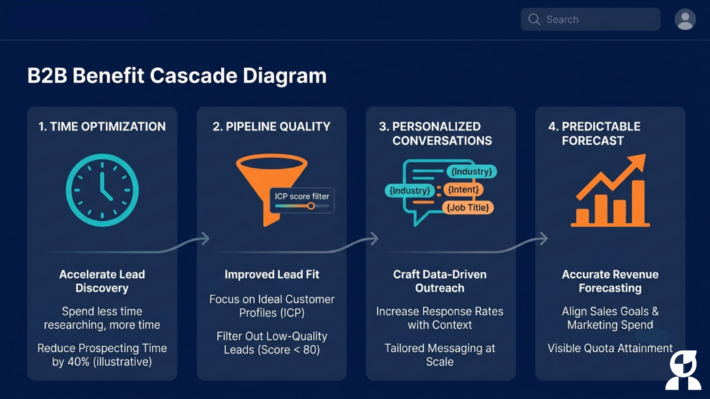
For a founder performing their own sales, this is a brutal time equation. Researching a single lead thoroughly (firmographics, executive background, recent news, relevant business context etc) takes 20 to 40 minutes. Multiply that by the number of leads entering the funnel each week, and the qualification work alone consumes the part of the day that should go into conversations and closing deals.
The criteria are not the bottleneck. The time to apply them is.
This is the gap where Agentic-AI qualification earns its place, and where it also gets misused.
Automation handles the parts that should never need a human: enriching firmographic data, filtering out disqualifiers, applying the ICP score against every incoming lead, and surfacing intent signals. It does not replace the human judgment needed for authority, timing, and genuine business need. The teams that get the most leverage are the ones that automate everything below the discovery call and put human attention only where it actually changes the outcome of a deal.
SalesOMMO’s Agentic-AI qualification is built around exactly this principle.
Every lead arrives pre-evaluated against your ICP, with an ICP Score that covers the firmographic fit layer automatically. An Executive Brief pulls together the company context, key executive insights, industry challenges, suggested questions, and anticipated objections. This is based on the research a human would spend 30 to 40 minutes gathering manually without access to our GTM Intelligence platform.
Draft personalized messages, aligned to the specific business context of that prospect, are ready before you make first contact.
The qualification work happens before the lead lands on your dashboard. Your time goes into the conversation, not into the spreadsheet that decides whether the conversation is worth having.
This is the less-is-more sales strategy applied at the infrastructure level. You talk to fewer leads. The ones you talk to are the right ones, and you show up to those conversations prepared. Win rates improve not because volume increased, but because precision did.

SalesOMMO is the GTM Intelligence platform for entrepreneurs and B2B sales teams. Upgrade human judgment with data and insights. Amplify humans, not inboxes.
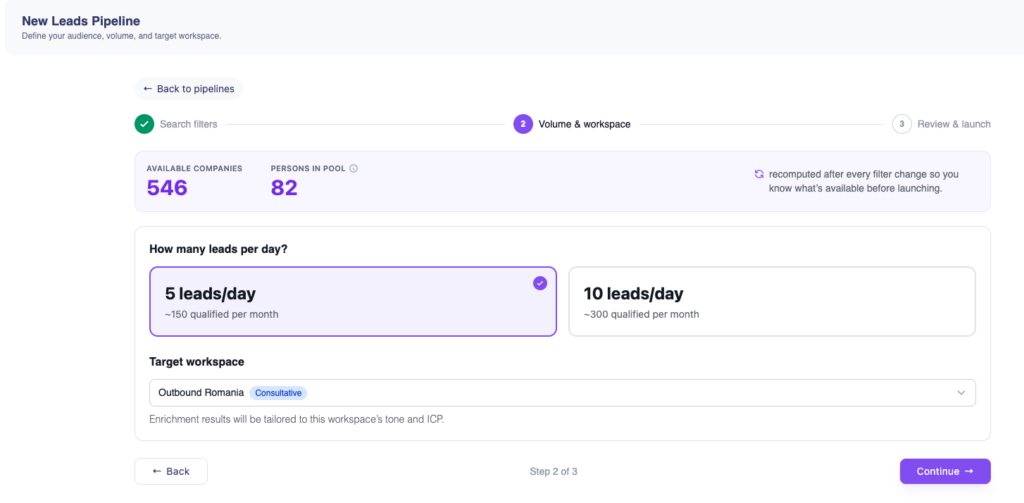
Get up to 150 new ICP-scored MQLs per month, with optional Agentic-AI qualification to narrow those into the SQLs that genuinely deserve your time. Full feature detail (ICP Score, Executive Brief, Agentic-AI qualification) at salesommo.com/features.
Free to start. From €99/month at salesommo.com.