
What Is B2B Lead Generation? The Process, Explained for Small Teams
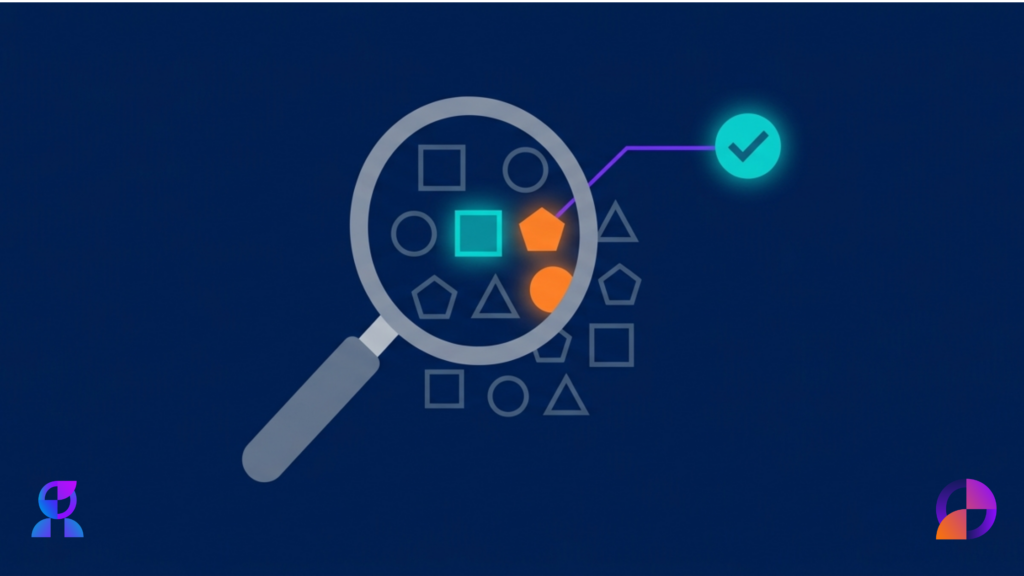
TL;DR: B2B lead generation is not a contact list. It is the process of finding companies that fit, finding the key executives inside them, and using GTM Intelligence to earn attention before they start actively considering your solutions, and qualifying whether the conversation is worth anyone’s time. Skip qualification and you’re not generating leads. You’re generating noise, with a CRM record attached.
What is B2B lead generation, really?
In plain terms: it’s the process of identifying companies that could genuinely benefit from your product, finding the people who influence that purchase, earning their attention, and deciding whether a sales conversation makes commercial sense. It’s the connective tissue between marketing activity and actual revenue, not a synonym for “collecting emails.”
A contact list is an input, nothing more. It doesn’t tell you whether a company fits your ICP (Ideal Customer Profile), whether the person you found is senior enough to influence a purchase, or whether the timing is right. Confuse the list with the pipeline, and you’ll spend your week talking to people who were never going to buy.
Gartner’s 2025 sales survey found that 61% of B2B buyers now prefer a rep-free buying experience, and 73% actively avoid suppliers sending irrelevant outreach. Robert Blaisdell, VP Analyst at Gartner, put it plainly: bad prospecting actively damages relationships with potential customers. Read that twice. The cost of getting this wrong isn’t a missed meeting. It’s a burned account you can’t easily win back.
How does the process actually work?
Five stages, and skipping the first one quietly breaks the other four.
Define the ideal customer profile. Start with the companies most likely to buy and succeed with your product: industry, company size, geography, revenue, technology stack, growth stage, operational problems, and buying triggers. The ICP’s job is to exclude poor-fit companies, not to make your addressable market look bigger on a slide. A definition broad enough to describe half the market gives your team a bigger spreadsheet. Not better targeting.
Map the buying group. B2B purchases usually run through users, internal champions, technical evaluators, budget owners, procurement, and a final decision-maker. Each role needs different information, i.e. sales cares about pipeline quality, finance about cost and risk, IT and CIOs about security and integrations. Write for one, and you’ve written for a fifth of the room.
Create and capture demand. Search for buying signals, look at their educational content, targeted emails (if available) and their LinkedIn outreach, referrals and partnerships, webinar categories and subjects, their paid campaigns, and the data they collect. The approach channel matters less than the reason for engaging. Every message should connect the prospect’s actual situation and preoccupations, to a relevant idea or next step; never open with your product.
Worth noting: discovery increasingly runs through AI before it ever reaches a human. Forrester’s Buyers’ Journey Survey 2025 found 94% of business buyers used AI during their research, and rated generative AI and conversational search as more meaningful information sources than vendor websites, product experts, or salespeople. If your content doesn’t hold up to being summarized by an AI assistant, it’s not going to survive the first filter.
Qualify the lead. This is where most of the commercial value gets created or lost. Assess four things: fit (does the company match the ICP?), relevance (right role?), need (a credible problem your product addresses?), and readiness (timing, intent, budget, or change signals?). A contact becomes commercially useful the moment your team can explain, in one sentence, why that company and that person deserve a conversation.
Nurture and hand over with context. Most qualified accounts won’t be ready today. Relevant content, follow-up, and periodic re-research keep the relationship alive without wasting anyone’s time. When the account does move to sales, the handover should carry company fit, contact role, engagement history, likely pains, buying signals, and a recommended next action — not just a name and an email address.
B2B is not B2C with a bigger invoice
B2C lead generation usually targets a large audience, a short purchase cycle, and one buyer making one decision. B2B involves smaller markets, higher contract values, longer evaluation periods, and several stakeholders who each need convincing on different grounds.
That difference demands deeper account research, role mapping, real qualification, and tighter coordination between marketing and sales. Cheap clicks and form fills can generate plenty of activity. They rarely generate pipeline. Activity and pipeline are not the same thing, no matter how the monthly report gets framed.
What to actually measure
Track what shows commercial progress, not what shows effort:
- ICP-fit leads
- Lead-to-meeting conversion
- Sales-accepted lead rate
- Qualified opportunities
- Pipeline and revenue by source
- Cost per qualified opportunity
- Sales cycle length and win rate
Ten qualified accounts can be worth more than a thousand unqualified contacts. If your dashboard doesn’t make that obvious at a glance, it’s measuring the wrong thing.
Where SalesOMMO fits into this
This is the exact gap SalesOMMO was built to close. It helps entrepreneurs and small B2B sales teams find companies and key executives, calculate an ICP qualification score for every lead automatically, and prepare contextual outreach through Executive Briefs and Agentic-AI qualification. The GTM Intelligence layer does the research. The human decides who’s worth the time. That order matters, and it makes a difference between qualification as a discipline, and qualification as an afterthought.
If you want the full system this fits into, our precision playbook for lead generation and sales outreach covers channels, cost benchmarks, and the funnel end to end.

Frequently asked questions
What is a B2B lead?
A person or company that may fit the target market and has shown a relevant signal, need, or engagement. A name and an email address, on their own, are contact data. Nothing more, until qualification says otherwise.
Which B2B lead generation channel works best?
There isn’t a universal winner, and anyone selling you one probably hasn’t run your specific market. The right mix depends on market size, buyer behavior, contract value, sales cycle length, available proof, and how much internal capacity you actually have to execute.
The starting point is always qualification
B2B lead generation works when targeting, research, content, outreach, qualification, and sales follow-up operate as one connected system, not five disconnected activities reported in five different spreadsheets. Start with a narrow ICP, map the buying group, give people a real reason to engage, and measure what actually becomes pipeline.
A narrower, better-qualified list gives sales more useful conversations and a clearer line to revenue.
SalesOMMO is the GTM Intelligence platform for entrepreneurs and B2B sales teams. No more spray-and-pray. No more AI-slop. Upgrade human judgment with data and insights. Amplify humans, not inboxes.
Get up to 150 new ICP-scored MQLs per month, with optional Agentic-AI qualification to narrow those into the SQLs that genuinely deserve your time. Full feature detail (ICP Score, Executive Brief, Agentic-AI qualification) at salesommo.com/features.
Free to start. From €99/month at salesommo.com.