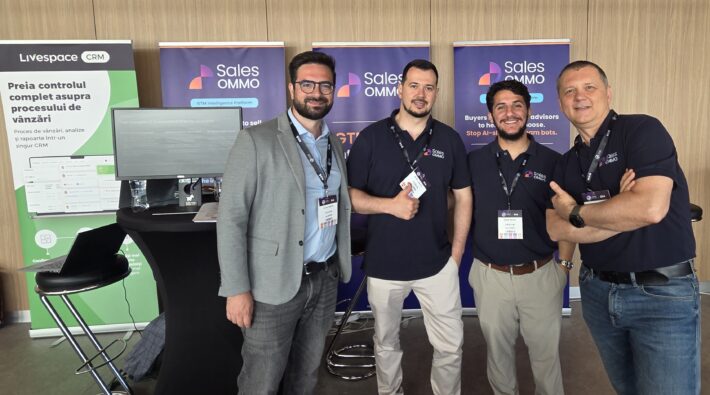
SalesOMMO @Business Days Timisoara
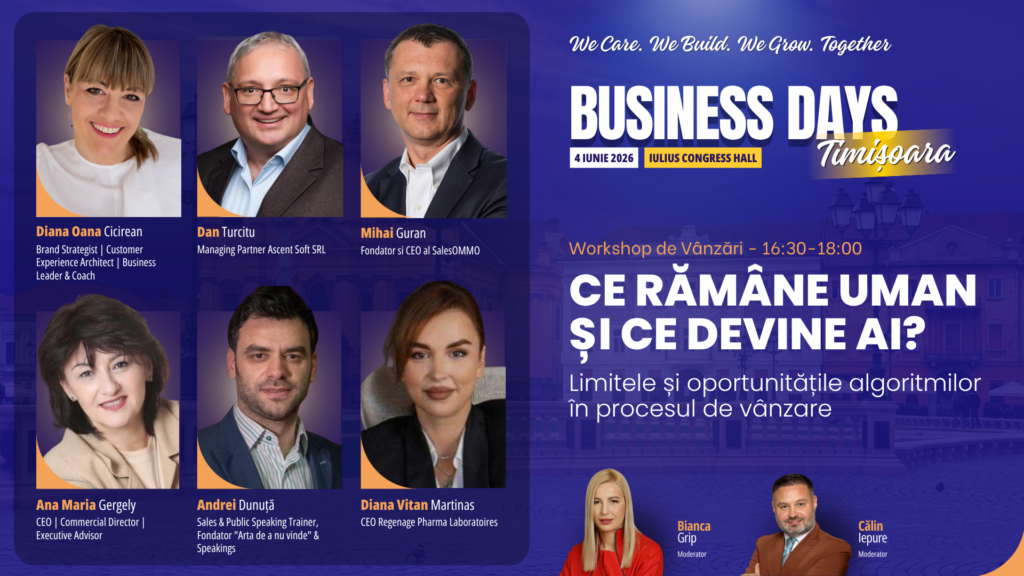
On June 4th, 2026 the 55th edition of Business Days brought together over 700 entrepreneurs and managers from Timișoara for a day.
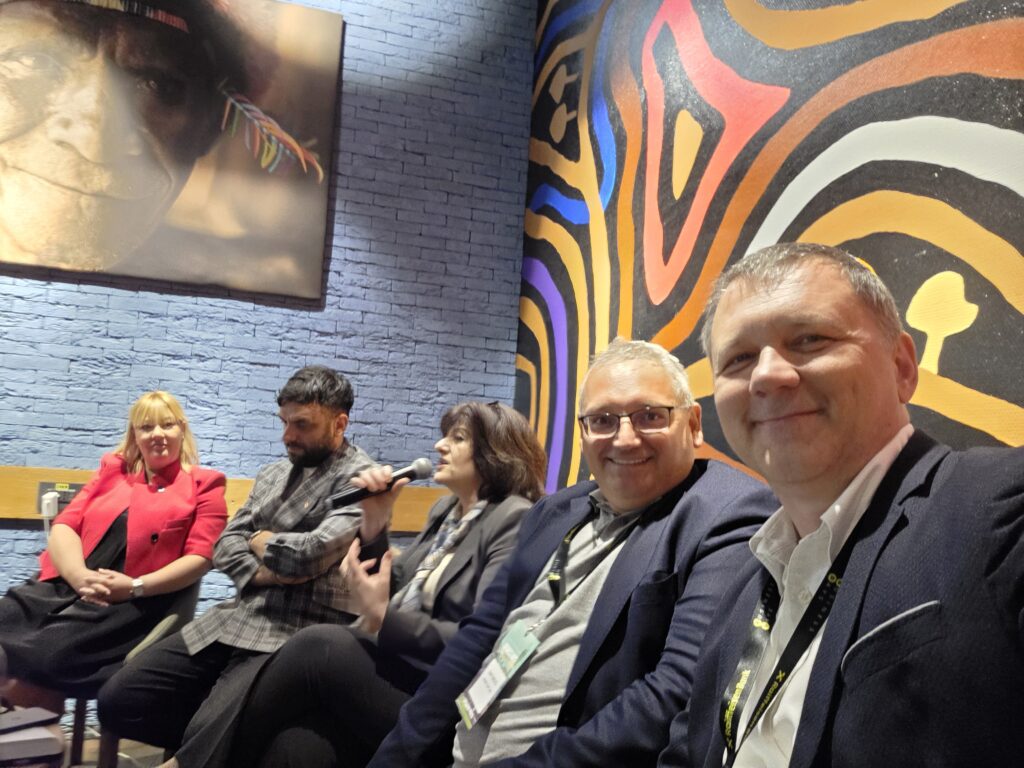
There is one question every B2B organization is asking in 2026: what changes when AI enters the sales process, and what should not change at all? Our Founder and CEO Mihai Guran joined the panel on AI in B2B sales to debate this theme, alongside Dan Turcitu, Founder of Ascent Soft, Ana-Maria Gergely, CEO and Executive Adviser and others, with Calin Iepure as Moderator.
Several questions from the session come up in almost every conversation we have with founders and sales leaders right now.
Where do companies get AI implementation wrong?
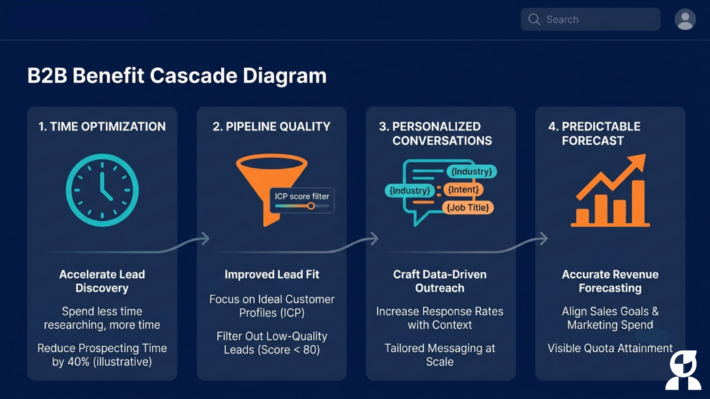
The most common mistake is not technical. It is sequencing. Companies buy an AI tool, plug it into the CRM, and expect the sales team to adopt it because the tool exists. What gets skipped is the preparation: defining the ICP with precision before any scoring model runs against it, agreeing internally on what “qualified” means, and telling the sales team explicitly what the AI can automate in order provide humans with support for a quick decision.
Skip that step, and two other things happen.
First, the Agentic-AI qualification optimizes toward a target that was never properly defined, which means it gets very efficient at finding the wrong accounts.
Second, and this is the part leadership underestimates, the sales team disengages. If people believe a tool exists to replace their judgment rather than remove their admin work, they will not use it well, or at all. Many will quietly work around it. Preparing the team is not a soft exercise for HR Department. It is a managerial attribute, and it makes the difference between an AI rollout that compounds and one that gets abandoned in six months.
Where does AI have the fastest impact in the funnel, and where does the human stay decisive?
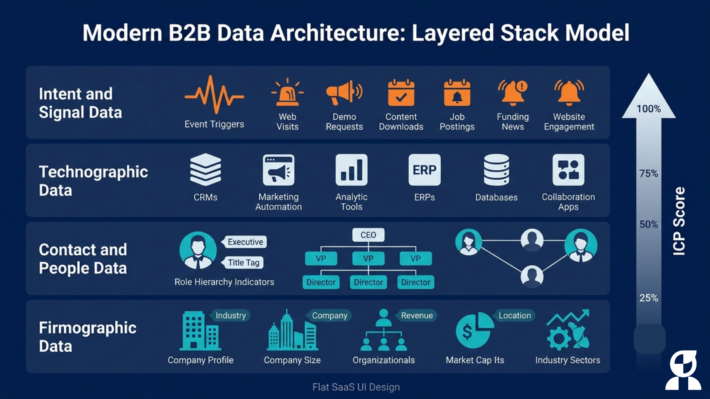
Prospecting and qualification are where the impact shows up first, and it is not close. Scoring a lead against your ICP, surfacing firmographic and technographic signals, generating an Executive Brief before a meeting: this is exactly the kind of structured, repeatable work that AI does faster and more consistently than a person researching manually at 11pm before a call. For a founder or a small team running sales without analyst support, this is where you get hours back every day.
Offering and retention sit at the other end. The moment a prospect needs to be read, not just briefed, is the moment judgment takes over. Deciding when to push and when to wait on a proposal, sensing hesitation that never gets said out loud, adjusting a solution mid-conversation because you noticed something the brief did not capture: none of that is a data problem. AI can tell you what happened. It cannot yet tell you what someone is not saying.
The practical implication for entrepreneurs and small teams: do not wait for a perfect, fully autonomous system before starting. Automate qualification and meeting preparation first, because that is where the return is immediate and the risk is low. Keep every outreach decision and every negotiation moment in human hands.
Preparing the team, automating the research, but protecting the human judgment, is what separates AI adoption that compounds from AI adoption that becomes one more tool nobody trusts.
Is there a risk that sales teams become too dependent on algorithmic recommendations? How do we keep the balance between data, experience, and intuition?
The risk is real, not a hypothetical one. We see what happens inside organizations that adopted AI scoring fast: after a few months, people stop asking why a lead scored high, and they just work the list. That is the moment the tool stops amplifying judgment and starts replacing it, quietly, without anyone deciding that should happen.
The fix is not less AI. It is designing the checkpoints where a human has to look at the recommendation and either confirm it or override it, and actually use that checkpoints.
This is why we built SalesOMMO around human-in-the-loop as architecture, not as a disclaimer. The ICP score tells you where to look first. The Executive Brief tells you what is publicly known. Neither one tells you whether the prospect buyer trusts you yet, or whether now is the moment to push or to wait. That judgment call stays with the humans in the room, every time, by design.
There is also a data discipline to this. An algorithmic recommendation is only as good as the ICP definition behind it. If the scoring model is not reviewed periodically and refined after key meetings, you are not building intuition into the system, you are just automating the original assumption and call it intelligence. The teams that keep the balance are the ones that treat every AI recommendation as a starting hypothesis to be tested in a real conversation, not a verdict to be executed.
“Less-is-more” in sales only works if the “less” is still chosen by a human who understands the account, not just automatically scored by a system set with an ICP that is a few months old already.
Congratulations to organizers for putting together another strong edition, and to Dan Turcitu, Ana-Maria Gergely and the other panelists for a conversation that stayed grounded in what actually happens inside a sales process rather than in AI hype.
Want to see how GTM Intelligence applies this in practice? Explore SalesOMMO’s features now, or register free and start using ExpertOMMO.